Archives for September 2019

Can I Be Meek AND Strong?

Words are important. We quickly learn as children to move our hand from the hot stove because the blisters and burns were so painful that one time we didn’t. At the library we understand what they mean by quiet! It means no talking. Not even whispering into your cell phone “for a quick minute!” The definition we give to words informs our attitude toward them. 

For a long time, the words humility and meekness have looked a certain way in my mind. Shy. Quiet. Doormat. Insecure. There was also the notion of putting others first and thinking of others more than I think of myself. Essentially, I had a blend of some negative connotations, peppered with a few grains of biblical truth. 

Overall, humility and meekness embodied undesirable traits to emulate. The end result was unattractive and didn’t look successful (which was very important to me), and I felt guilty to be unable to produce these traits in my own character. I suspect I’m not alone.

Letting the Bible Shape Our Definitions 

“What does the Bible say?” is usually my favorite question to ask myself when faced with a challenge. I’m ashamed to say it was not one I initially used to question my own faulty narrative regarding these two character traits. Nonetheless, Scripture came to my rescue.It was a deep-dive into the letter Paul wrote TItus that helped me see I’d misunderstood humility and meekness. The language both challenged and enlightened me. Because that’s what Scripture does: It brings light to things otherwise hidden.

Titus 2:15a reads: “Declare these things; exhort and rebuke with all authority.” The verse stopped me in my tracks. An inner dialogue of sorts began inside my head. Declare, exhort, rebuke; these are all strong action verbs, I thought. These are not actions to be carried out by someone who was a doormat or insecure. They require confidence. Yet, we are called to be humble. What does it look like to declare, exhort, and rebuke, while remaining meek? How does that even work? Scripture had my full attention. So I kept digging.

Letting the Bible Explain the Bible

When you are a Christian, you will feel the tension between the life we currently have here and the one we are headed to in glory. In practical terms, this means we will live in the tension of familiarity that becomes strange as we grow in our faith, and strangeness that slowly becomes our home. The Bible calls us exiles. Because that is exactly what our status is: Exiled from our true home.  

I’d misinterpreted what humility and meekness meant. How? Like so many, I learned early in adulthood to define success and confidence through the world’s definition. To succeed and be confident meant to be strong and self-reliant. Weakness was not admirable, nor did it lead to success. Weak is who the winners ate for breakfast. 

But here’s a quick look at what the Bible says about meekness:

From the lips of Jesus, when he spoke the beatitudes: “Blessed are the meek, for they shall inherit the earth.” Matthew 5:5 (ESV)

Written by David, roughly a thousand years before Christ: “But the meek shall inherit the land and delight themselves in abundant peace.” Psalm 37:11 (ESV)

These verses, separated by a millenia and similarly worded, are pointing to a promise. One prophesied by a shepherd who would be king; the other preached by the King who came to shepherd. Who is the promise for?

Since the Old Testament was written in Hebrew and the New Testament in Greek, it’s worth looking briefly at the vocabulary employed to make this promise. In Hebrew, meek means “…of a lowly, pious, and modest mind, which prefers to bear injuries rather than return them…”[note]https://www.blueletterbible.org/lang/lexicon/lexicon.cfm?strongs=H6035 [/note]

As for the Greek meaning, we find: “…that the meekness manifested by the Lord and commended to the believer is the fruit of power. The common assumption is that when a man is meek it is because he cannot help himself; but the Lord was ‘meek’ because he had the infinite resources of God at His command.”[note]https://www.blueletterbible.org/search/Dictionary/viewTopic.cfm?topic=VT0001785[/note] The confidence displayed in the meekness of Jesus is “neither elated nor cast down, simply because it is not occupied with self at all.”[note]https://www.blueletterbible.org/search/dictionary/viewTopic.cfm?topic=VT0001785[/note] 

Letting Jesus Show Us the Way

Lest we forget this conversation.[note]John 14:1-7[/note] When Jesus was outlining his purpose for the disciples saying: “I will come again and will take you to Myself, that where I am you may be also. And you know the way to where I am going.” Thomas interjects: “Lord, we do not know where You are going. How can we know the way?” And Jesus said, “I am the way, the truth, and the life.”

Essentially, Jesus was saying: Look to me for how to live between now and when you arrive home.  Jesus’s life, words, and attitude provide a real-life example of what meekness and humility look like. Because he embodied humanity in his own flesh, we can find clarity in his life where our definitions fail us. 

So, herein lies the paradox. Humility embodied in Christ looked like a man who ordered storms to cease and left his closest friends scratching their heads wondering what kind of man he was, who could command obedience from wind and sea.[note] Matthew 8:23-27; Mark 4:35-41; Luke 8:22-25[/note] Indeed, meekness is lived out in the Lamb who stood before worldly authorities and did not seek his own defence. Yet he affirmed his identity when he declared at his friend’s funeral, “I am the resurrection and the life” (John 11:25-27), right before bringing  that friend back to life in front of everyone present. 

In Jesus; God made flesh, we see meekness with power that declares Who he is, rebukes even stormy waters, and exhorts men with authority and life-altering love. The same man who overturns tables in anger also bends down to wash the dirty feet of twelve men, including the one who would betray him. Indeed, what man is this? Jesus. That’s Who.

Jesus was not shy, and he was certainly not insecure. We think doormat and roll our eyes when we remember that as Christians we are told to turn the other cheek. But in Jesus, meekness looks like surrender. He could be bold because he had nothing to prove; he knew exactly who he was. He was a King who had come to save others by doing for them what they could not do for themselves. He was confident in the One who sent him, and therefore did not feel insecure when others questioned, doubted, or even abused him. He felt hurt, yes. But his identity never wavered. 

Jesus’ whole life was example after example of turning the other cheek. Not a doormat, but more like a doorway. Instead of walking on it, he invited all to walk through it, so they could be made new. He loved us beyond all measure to the point of death, so we wouldn’t have to die. 

When I think ‘doormat,’ I think of someone who lets others take full advantage of them –  Someone who doesn’t think their personhood deserves or should demand any regard from others. Yet Jesus, being truly man and truly God, understood his worth plainly. He wasn’t letting others take advantage of him. He was simply fulfilling the purpose for which God the Father sent him. His life on earth was entirely surrendered. From Bethlehem to Gethsemane, his life was willed by the Father. Meekness is the confident obedience to surrender our rights to ourselves and live under the lordship of Christ. Humility as lived out by Jesus is otherworldly power contained and joyfully submitted for others’ sake.  

Do we dare live like this? Yes! Because when we are meek, we no longer make this life our personal pursuit of happiness and self-actualization. That often leads to an exhausting chase after perishable things that consume without giving life. The source of our joy comes not from fighting to have our way, but from following His. And the astounding result is that in the process, we end up uncovering our true self and worth. We are strong. Strong enough to declare, exhort, and rebuke, without the personal agenda for self-affirmation. Strong enough to bear injuries rather than injure. True strength is found when we become meek and reflect our Savior.

 

About the Author: Paola Barrera was born in Spanish, lives in French, and thinks in English. She loves words and uses them as arrows to point to the best words she knows — those left by our Maker and found in Scripture. Her aim: to think biblically about all of life. She’s a writer, speaker, and mentor. She blogs at WordsOutloud.net where she writes from the intersection between everyday life and eternal perspective. Canadian through the gift of immigration, she and her husband Gustavo call Montreal home. You can find her on twitter @Paola_BarreraR and Instagram @paola_m_barrera.
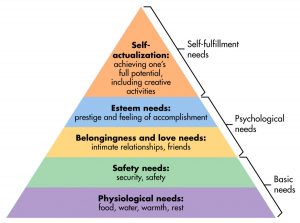
Podcast 018 – “Maslow’s Theory of Self-Actualization & What It Means For Us” with Marilyn McGraw

The term self-actualization was first made famous by psychologist Abraham Maslow in the 1950’s and is the ultimate goal of his hierarchy of needs (see below).  The theory, which describes a process by which an individual can reach his or her own full personal potential, plays a fundamental role in current education, health, and social justice practices.

Our podcast guest today shares insight into how we as followers of Christ can analyze and understand a secular theory like this one. What does it mean for a Christian to self-actualize?  How, if at all, can we glean truth from research and concepts that aren’t rooted in scripture? What role does the gospel play in Maslow’s theory of self-actualization, and what might this mean for the church?

Join us as we uncover the theory and seek to better understand self-actualization from a Christian perspective.


Image by: https://www.simplypsychology.org/maslow.html


Digging Deeper:

Consider reading through these scriptures in light of Maslow’s theory of self-actualization. How do they contend with or complement the theory? What do they imply about our aspirations and gifts? How and for whom should the goal of self-actualization be?

  • Matthew 6:33 – “But seek first His kingdom and His righteousness, and all these things will be given to you as well.”   
  • John 18:36 – “My Kingdom is not of this world.” 
  • Philippians 3:12 – “Not that I have already obtained this or am already perfect, but I press on to make it my own, because Christ Jesus has made me his own.”
  • 1 Corinthians 12: 4-6 –  “Now there are varieties of gifts, but the same Spirit; and there are varieties of service, but the same Lord; and there are varieties of activities, but it is the same God who empowers them all in everyone. To each is given the manifestation of the Spirit for the common good.”
  • Matthew 10:29 – “Whoever finds his life will lose it, and whoever loses his life for my sake will lose it.”
  • John 13:34-35 – “ A new commandment I give to you, that you love one another: just as I have loved you, you also are to love one another. 35 By this all people will know that you are my disciples, if you have love for one another.”


About Our Guest: Dr. MarilynMcGraw is the Founder/CEO of Excellence At Work where her role focuses on individual and corporate coaching, speaking engagements, training, meeting facilitation, and retreats. Dr. Marilyn has developed a “just do it” style that motivates and encourages clients to achieve higher levels of personal and professional effectiveness. She is the author of Running Away for Three Weeks, an inspirational autobiography designed to prepare readers for maximum effectiveness in the workplace; creator of Discovering Your Workplace Gifts, an assessment to help individuals identify the gifts they were motivated to discover; and author of Six Steps to Excellence for Leaders, a road map to personal and professional excellence for all leaders.

God’s Grace, Your Grit

Our family of three recently returned from a few trips in the last month where our two year old son slept in our bed most nights. It wasn’t a normal routine for him and we figured it would be a little hard to transition him back into his own bed when we got home. In reality, it ended up being much more difficult than we expected. He didn’t want to be away from us, day or night.

Our efforts to have him sleep in his own bed required 2 hours to put him to bed, then getting up 4 to 5 times a night when he would scream. He also learned the dreaded skill of climbing out of his crib during this time. I would hear a huge crash and scream at 3am that jolted me out of bed and hurried me to his bedroom to make sure he wasn’t hurt. Once the crying settled, then it was trying to go back to bed after an adrenaline rush. We were starting to feel like we had a newborn again and were already exhausted from the traveling we did the weeks before. 

One particular night I found myself on the floor next to my son’s crib, rubbing his back after I had been in his room for close to an hour and a half. I felt myself getting angrier and angrier that he wouldn’t for the love of anything just go to sleep already! I wanted to be out on the couch watching TV or literally doing anything else besides being trapped in his room. It had been weeks since our regular schedule of his 2 hour nap and 8 o’clock bedtime and I was ready to have it back.

And that’s when I felt the Lord ask me: “Are you not physically able to do this right now or do you just not want to?”

Like many questions the Lord asks, it stopped me in my tracks.

My honest answer? Of course I was able. I had a deep well of physical capacity to accomplish the task at hand. I just didn’t want to. 

As someone with a history of ignoring my own needs and boundaries, I had swung the other way on the pendulum where many things were about me and what I wanted to do. The balance between self-care and self-denial is always changing and I do my best to stay somewhere in the middle, but it’s hard!

Have you ever come across a mom who’s more joyful about motherhood than you? I’m talking about the moms who, through the good and bad, easy and hard, are still joyful about their work. It’s convicting and curious at the same time. Like, what am I missing here?

The Lord’s question to me revealed that CHOOSING to serve my family as a general attitude, no matter the circumstance, will bring me more joy than wishing I was doing something else.

In the past I have had a fear of becoming a slave to my family. I didn’t want to be run over or unappreciated. Can I really enjoy giving to my family without feeling like a slave to others?

I have since realized that I’m nobody’s slave if I choose to do it.  

There were many times I had decided in advance that I didn’t want to read more bedtime stories or clean up the kitchen or cook dinner, even though I was fully capable. 

Other than the Lord, you are the only one who truly knows the attitude of your heart. Choosing to serve your family isn’t about ignoring ALL of your needs ALL of the time. It does require you to have boundaries and it does require you to uphold them. 

Practical Suggestions for an Attitude of Willingness

Asking a few questions when you’re not feeling like giving anymore helps get to the heart of the matter.

  1. Is this something I can’t do? Or something I don’t want to do?

Sometimes we have a hard day emotionally. Or a lot of hard days emotionally. Sometimes our emotional capacity is maxed out while we still have more to give in our physical capacity. It can help to focus on the area that we are strong in at the moment, physical capacity, rather than your weakness and complete the task at hand. Be sure to circle back to your emotional needs at another time when you are able.

    2. What do I need to implement more or less of in my life so I can maintain an attitude of willingness? 

Do I need less screen time? Can I do less activities outside the house? More planned time away from family? More time with the Lord? Can I hang out with other moms that have a heart of willingness and be encouraged? 

Be Encouraged by the Word

Reading the Bible is to our benefit. Marriage and motherhood takes a lot of our grit and elbow grease to keep digging in. Our perseverance and passion need continual stoking. There are many verses we can cling to when it comes to giving to our families. Reflect on the scriptures below and consider how they apply to your circumstances.

    • “You must each decide in your heart how much to give. And don’t give reluctantly or in response to pressure.” 2 Corinthians 9:7
    • “She seeks wool and flax, and works with willing hands.” Proverbs 31:13
    • “Let us then approach God’s throne of grace with confidence, so that we may receive mercy and find grace to help us in our time of need.” Hebrews 4:16
In The End

The decision to serve our family is one that is noticed. Our family members enjoy our happy-hearted giving, just as we enjoy theirs.

It’s hard to keep the tension of self-care and self-denial – That’s what God’s grace is for. Together, we use our grit and God’s grace to stay in a willing place of self-sacrifice without killing ourselves.

My Prayer for Grit and Grace

Lord, I need your grace to help me dig in today. Help me want to give to others. Help me to see and think outside of myself. Lord, I know that sometimes I have a bad attitude about the work I do, help me to get to a place where I can enjoy this today. Give me reminders that my work is important and cherished by you. You see the grit I put in and appreciate it. Help me to know when I need to rest and when I need to dig deeper. Show me quickly when my heart has turned away from serving and steer me back towards loving my family with my whole heart.


About the Author:  Hi there! I’m Lynnaea and I am mama to one little man named Remmik and married to my favorite guy, Dave, for almost 5 years! I enjoy fresh air in my lungs and anything with the mountains, trees, or ocean. I was raised in the Pacific Northwest but have lived in the beautiful town of Homer, Alaska for the last 3 years. You can find more of my writing on the Rosebud Blog.



Come As You Are, But Don’t Leave the Same When You Go

So real talk. I grew up in the church, heard bible stories, sang songs, did Awana, all the things. But until my early twenties I didn’t actually understand that Saul was Paul. I was reminded of this on my visit to Rome last summer, where Paul spent some of his time as documented in Acts and in his letter to the church in the book of Romans. It was interesting to see where that reflection led and how there’s some major tie-in with a concept God has been teaching me for the last eight years or so. The Saul/Paul faux-pa of mine reflects the major theological concept of sanctification in two different ways. 

The first was personal. For most of my life I was showing up to church and encountering the truth of who God was, but wasn’t being transformed and changed by what I was learning. It wasn’t until different trials, encouragements, relationships, and even ego-shattering events lead me to desire God more deeply. Only then did I begin to realize there was more to the Bible than just reading the words. There was more to my relationship with God than just showing up to church on Sunday. 

In Christianity, the transformation that comes as we encounter Christ, obey him, and seek to live our lives based on His call to holiness is part of an important process called sanctification

This new knowledge changed many aspects of my Christian walk. God continued to show me how important it was to truly study and understand his written word. Not just plug in pretty verses, or magical 8 ball bible flipping when I was in a struggle. But like ACTUALLY study it. Then ACTUALLY put it into practice – However God led, through conviction to change, encouragement to do something more, or clarity to align what I may think was true to what he says is true through the Bible. 

The second reason my Saul/Paul realization is borderline comical, though, is because of the documented sanctification process that Paul went through in the New Testament. 

It’s a concept revealed throughout the Bible, but I’d never really noticed it before: God never leaves a life unchanged after encountering Him and surrendering to His truth. 

Paul’s dramatic testimony as a man who hunted down and murdered early Christians transformed into a man dedicated to supporting early churches and writing at least seven books of the New Testament is an extremely encouraging example. He didn’t just meet Jesus and follow him, his life was truly changed by the truth he learned. 

So why does this matter? 

It’s important because we can get half of the full truth by studying scripture certain ways. This not only affects our understanding of the Bible, but our personal walk with the Lord. How we study the sanctification process and it’s biblical implications forms our outreach, verbiage, and most importantly, our understanding of who God is. 

One of the major taglines I hear in current church culture is, “Come as you are.” One of the closest verses I see in the Bible that talks about this is in Matthew 11: 

“Come to me all who labor and are heavy laden, and I will give you rest.” (Matthew 11:28, ESV) 

The verse is such a comforting and loving picture of how Christ knows we’re struggling and how He wants us to come to him for rest. It’s beautiful. 

It’s easy to walk into churches that proclaim, “Come as you are” in an effort to reach people who desperately need Jesus, who need rest, who need perfect love, and feel encouraged by this response to just come. All are truly welcome. But focusing on only one side of this scripture and concept can leave out the very important other side – We are also called to be transformed. The Bible isn’t a halfway picture, and further reading reveals more of the complete story. Matthew 11 continues with: 

“Take my yoke upon you, and learn from me, for I am gentle and lowly in heart, and you will find rest in your souls. For my yoke is easy and my burden light” (Matthew 11: 29-30, ESV).  

In this passage, Jesus describes how we’re to learn from Him, do as He does, encounter and take His yoke upon us. We’re to lean in close with Him and walk through life learning from His ways. In being called to change and learn from Christ, we don’t stay in the same place. We leave different than who we were when we first came.

Here’s what’s on my heart: There’s grave danger if we leave out half of the picture when reading or studying the Bible. Claiming to simply “come as you are” doesn’t reflect the change encountered when we allow God full access to our lives. I’ll save touching on specific topics, but we could insert any hot button people group and it would reveal why this tagline can be popular to relate or invite people in. It’s so very broad. 

In reality, all of our lives and sins fit into what needs to be conformed into God’s ways. 

God doesn’t leave us unchanged once we encounter Him. We’re called to learn how Jesus lived, learn how God calls us to change through studying the Bible, obey the truth of His precepts, and surrender to the sanctification process. 

And let me tell you, it is amazing. 

And it is painful. 

But it is part of God’s design and the wonderful work He does as we learn how to live life the way He wants us to. 

God’s perfect love doesn’t just call us to come as we are, it calls us to not stay the same as we go. 


Seeking change alongside,

Amanda


About the Author: Amanda lives in Portland, Oregon and is a cardiac ICU nurse. She has a heart to live out the Great Commission in both her workplace and in the city at large. She loves the Bible, and wants to see her own and many others lives continually transformed by the solid truth of God’s word. She enjoys hot tea, baby goats, and adventures in the mountains. Seeking & serving Jesus while being made in His image is her core desire.

 

3 Surefire Ways to Labor in Vain

My sister-in-law was tired, weary, and in extreme pain delivering her first baby when the doctor paused and said, “It’s called labor for a reason.” Though insensitive and borderline cruel, the obstetrician was right. Labor is hard.

Webster’s Dictionary defines labor as “the expenditure of physical or mental effort especially when difficult or compulsory.” As followers of Christ, there is no way around it. We were created for hard work. For labor. For toil. From the time God set Adam and Eve in the garden to care for the land and subdue it, Biblical narrative reveals that action is expected. We are workers. Whether laboring as stay-at-home parents, students, teachers, landscapers, artists, truck drivers, accountants, or lawyers, each and every one of us is called to a life of productivity. 

King Solomon introduces us to vain labor in Psalm 127:

Unless the LORD builds the house, those who build it labor in vain. Unless the LORD watches over the city, the watchman stays awake in vain. It is in vain that you rise up early and go late to rest, eating the bread of anxious toil; for he gives to his beloved sleep. (Psalm 127:1-2)

To toil or labor in vain means to waste our work – To nullify it or make it void. Solomon knew that unless God was overseeing and at the core ambition of building, the final product wasn’t even worthy of a watchman. The house was useless. The work – however difficult, cumbersome, emotionally draining, yields a worthless result.

Prophets shared the same lament of useless toil as they warned a godless Israel to repent: 

You will eat but not be satisfied; your stomach will still be empty. You will store up but save nothing, because what you save I will give to the sword. You will plant but not harvest; you will press olives but not use the oil, you will crush grapes but not drink the wine. Micah 6:13-15  

Though they build houses, they will not live in them; though they plant vineyards, they will not drink the wine. Zephaniah 1:12-13 

You have planted much, but harvested little. You eat, but never have enough. You drink, but never have your fill. You put on clothes, but are not warm. You earn wages, only to put them in a purse with holes in it. This is what the LORD Almighty says: ‘Give careful thought to your ways.  Go up into the mountains and bring down timber and build my house, so that I may take pleasure in it and be honored, ‘ says the LORD. ‘You expected much, but see, it turned out to be little. What you brought home, I blew away. Why?’ declares the LORD Almighty. ‘Because of my house, which remains a ruin, while each of you is busy with your own house. Haggai 1:6-9 

There are ways we as followers of Christ can yield worthless results as well – Approaches to work that leave us “busy with our own house” (Haggai 1:6-9) while effectively producing nothing. Here are three surefire ways even followers of Christ end up laboring in vain.

1) We Follow Our Passion

Steve Jobs’ commencement speech at Stanford’s 2005 graduation ceremony was legendary. Many believe the catch-phrase “follow your passion” came from Steve’s poignant call for students to “have the courage to follow your heart and intuition” and to “find what you love and do it.” 

There is nothing inherently wrong with doing what we love. It’s freeing and beautiful when God’s will and our passion projects collide, but a simple look at the Old Testament prophets and New Testament apostles reveal that labor for the Lord doesn’t always mean we’ll enjoy it. Rather, it may land us in Ninevah, a flaming furnace, or with the beloved John exiled to the island of Patmos. 

Labor for the Lord means serving who we love rather than doing what we love. There’s a stark contrast. One leads to selfish ambition, temporal gain, and earthly reward – A possible shifting from one thing to another as we surmise that, ‘If I don’t love it, I must be on the wrong path.’ The other promises everlasting life and bountiful fruit. 

Following our own passion without prioritizing Kingdom needs, God-given gifts and talents, and where He is asking us to go may yield immediate pleasure, but following Christ’s passion ensures true satisfaction – A life of purposeful toil rather than worthless labor.


2) We Work For Our Own Glory

Paul’s message to New Testament believers was clear: Whoever you are and whatever you do, do it with grit and a heart that’s invested. Be ALL IN, but not for earthly gain.

Whatever you do, work at it with all your heart, as working for the Lord, not for human masters, since you know that you will receive an inheritance from the Lord as a reward. It is the Lord Christ you are serving. Colossians 3:23-24

But as the servants of Christ, doing the will of God from the heart; With good will doing service, as to the Lord, and not to men. Ephesians 6:6-7 

If we truly work for the Lord, we won’t require human glory, appreciation, or approval. Daily surrender as service to Christ Jesus may not bring earthly recompense, but we’re promised the greatest reward possible: A share in the Kingdom, everlasting life, and a forever home with our worthy God.

So when we study, we study for the Lord. When we sing, we sing for His glory. When we raise children, we raise them in an effort to please Him, and when we build a home, we build it for His purpose.


3) We Diminish the Significance of Our Work

I’ve said it more often than I want to admit: “I’m just a stay-at-home mom,” or, “I used to be a teacher.” I minimize the value of my labor and have heard some of you do it, too. 

We need to remember that ALL of our work is ministry work. Each dish washed, coffee served, class passed, corporate deal secured, house sold or lesson taught is for His glory. Every aspect of our labor is significant. Our toil is important. No work surrendered to His purpose and for His glory is in vain.

In his letter to the Philippians, Paul argues that an attitude of selfless work for God’s mission should make us glad and cause us to shine as lights in this dark world. We don’t complain about our work because we know how valuable it is to the Kingdom.

Do all things without grumbling or disputing, that you may be blameless and innocent, children of God without blemish in the midst of a crooked and twisted generation, among whom you shine as lights in the world, holding fast to the word of life, so that in the day of Christ I may be proud that I did not run in vain or labor in vain. Even if I am to be poured out as a drink offering upon the sacrificial offering of your faith, I am glad and rejoice with you all. Likewise you also should be glad and rejoice with me.

We rejoice as a “poured out drink offering” not because our work feels significant, is enjoyable, or fulfills a void in our lives. We rejoice because our labor has Kingdom purpose and forever consequence.

So when we feel overwhelmed, empty, bored, threatened and weary in our labor, we need to remember who we’re really working for. In the words of Paul, we must “hold fast to the word of life, so that in the day of Christ [we] may be proud that [we] did not run in vain or labor in vain.”

Toil for His passion, work for His glory, and believe that your efforts matter for eternity. 

For Further Study

Read and reflect on 2 Corinthians 4.

In what context was this passage written (pay attention to the “therefore” at the beginning of the chapter). Who wrote it and for what purpose?

  • Based on the text, what can we expect from a life in service to Christ? Consider making a list in the margin of your Bible or in a separate notebook.
  • If everything in the list you created is true, why should we “not lose heart” (v. 1 and v.16)? What will we receive?
  • Do you find yourself laboring in vain? Unsure of why or for whom you are working? Take time to write a prayer of confession and determine a plan of action. Remember, we must be “doers of the word, and not just hearers who delude themselves” (James 1:22).


About the Author: Lisa DaSilva is a wife, mom of two teenagers, and advocate for women to love God with their heart, soul and mind as they engage in responsible study of His Word.  

Lisa is a teacher by trade and passion, voice for the marginalized, recovering striver, and lover of simplicity, authenticity, and all things pretty. She enjoys thrift store shopping and often has to convince people she’s an introvert.  Just a loud one.

Lisa loves the local church and is proud to call Summit View Community Church in Vancouver, WA home.

Loving Jesus and making Him known really is her everything.  


Copyright © 2026 · Theme by 17th Avenue

Copyright © 2026 · Amelia on Genesis Framework · WordPress · Log in